Leave A Message
If you are interested in our products and want to know more details,please leave a message here,we will reply you as soon as we can.

Traditionally, pregnancy in cattle has been diagnosed through rectal palpation or ultrasound.With advancements in biological sciences, it has been discovered that Pregnancy-Associated Glycoproteins (PAGs) are specific proteins that appear in the peripheral blood of ruminants after conception, secreted by binucleate cells of the embryo, and play a crucial role during pregnancy. Our rapid bovine early pregnancy test card offers an accurate method for detecting PAGs in whole blood (EDTA), plasma (EDTA), or serum as early as 26 days post-breeding and throughout the entire pregnancy.
Intended Use
High-sensitivity Bovine Pregnancy Rapid Test Kit for onsite cattle diagnosis. Detect PAGs in bovine blood within 5-10 mins from Day 28 post-breeding. Wholesale & OEM.
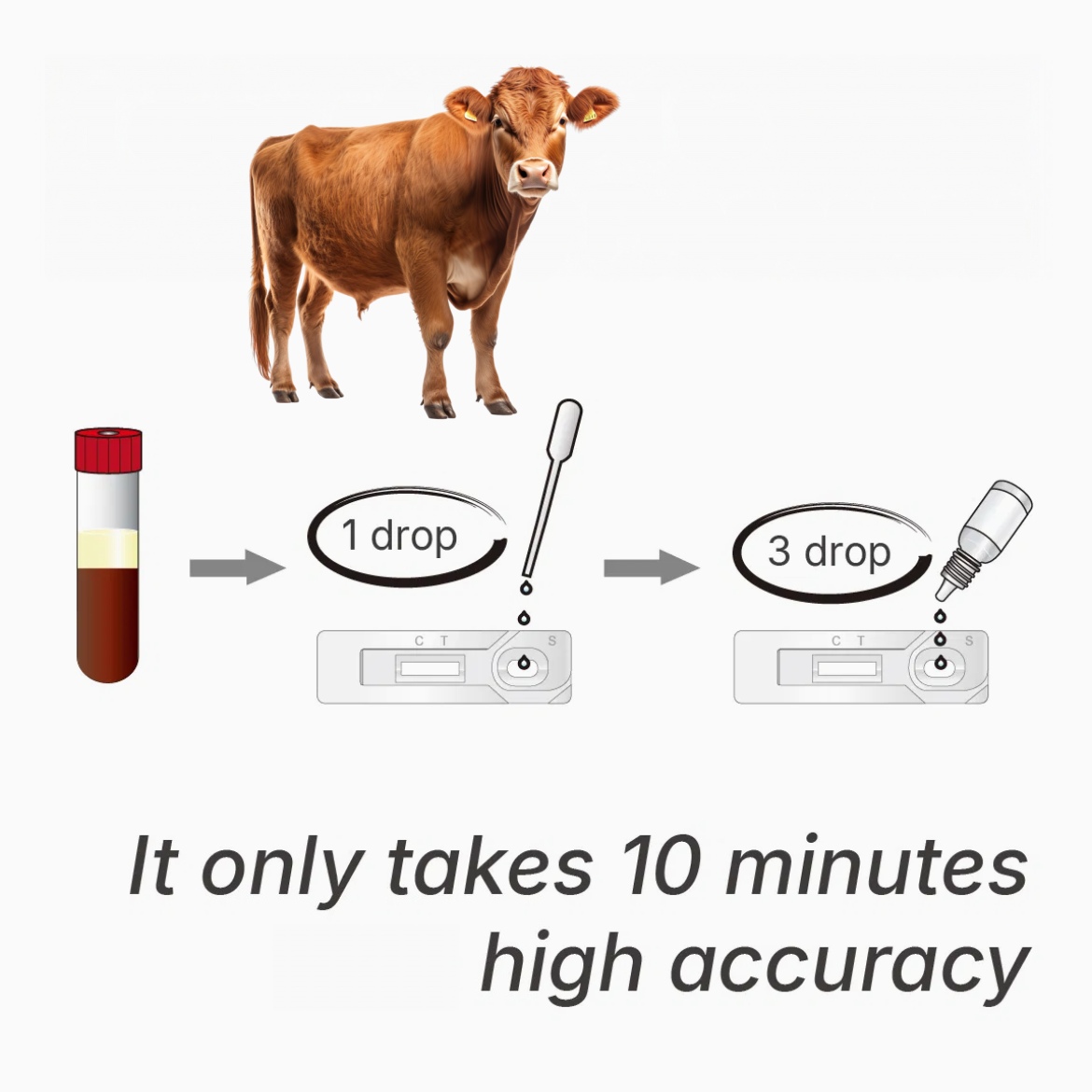
The Bovine pregnancy Rapid test is a qualitative test. It detects the presence of pregnancy-associated glycoproteins (PAGs) in the peripheral blood of ruminants after pregnancy using a double-antibody sandwich system on a nitrocellulose membrane. During the test, the PAGs in the blood of cattle binds with a gold label and then binds with the antibody on the test line, showing a purple band. If the sample does not contain PAGs, no color reaction occurs.
Managing reproductive efficiency is the single most critical driver of profitability in modern commercial cattle farming. Relying strictly on traditional palpation per rectum (requires an experienced vet and typically occurs after Day 35-40) or ultrasound scanning (requires expensive infrastructure and specialized training) often delays the identification of open cows, directly driving up your herd's Days Open metric and feed costs.
Our Bovine Pregnancy Rapid Test Kit provides an immediate biological breakthrough. By analyzing a simple drop of blood for placenta-specific PAGs, farm managers can instantly catch non-pregnant cows at Day 28 post-artificial insemination (AI) or natural mating. This allows for immediate re-synchronization protocols and re-breeding within the same reproductive cycle, maximizing your farm's milk yields and calving numbers.
Specimen Type:
Whole Blood, Serum, or Plasma
Whole Blood
Serum
Plasma
Avoid prolonged exposure to excessive heat, direct sunlight, or repeated temperature fluctuations.
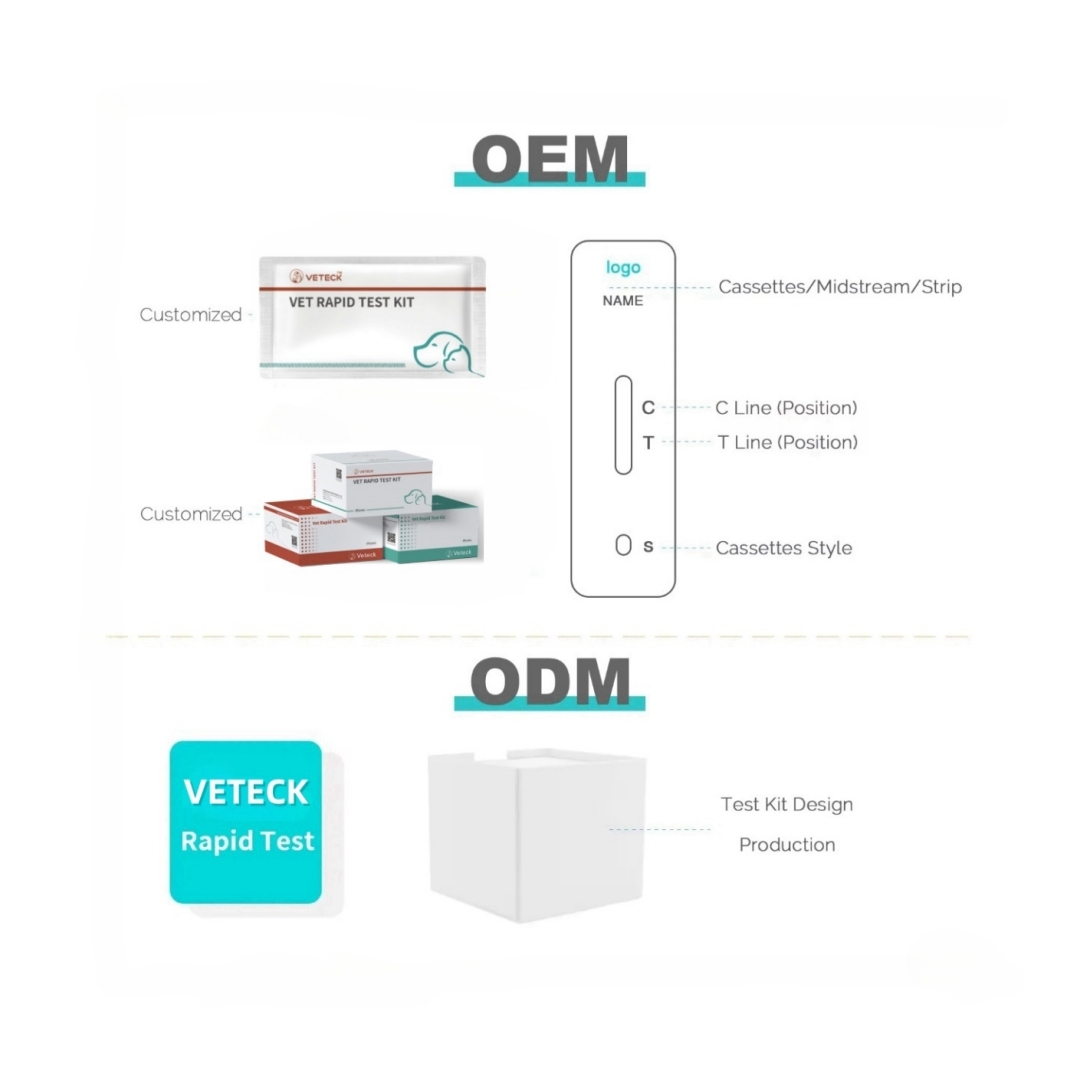
OEM & Private Label Livestock Diagnostic Solutions

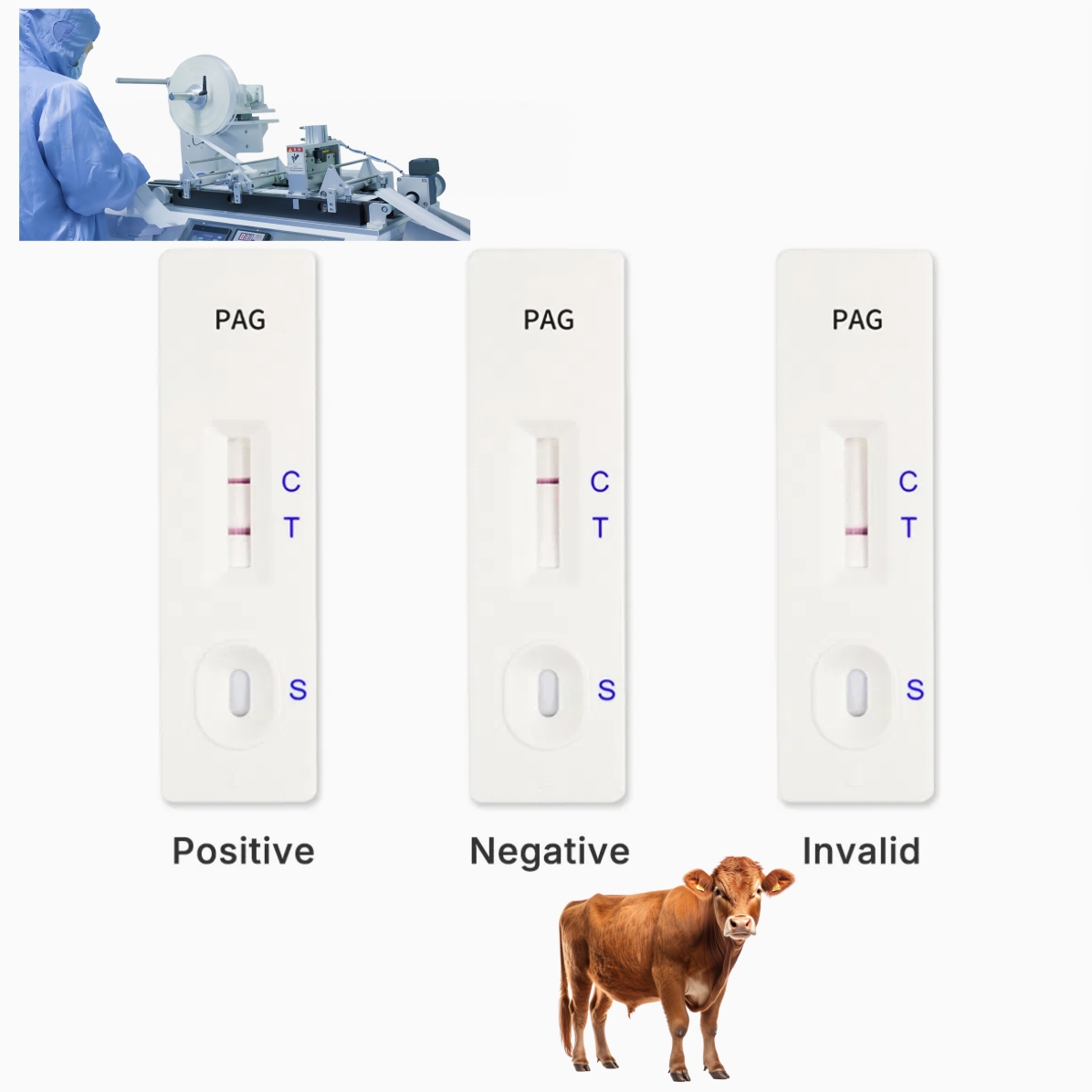
Traditionally, pregnancy in cattle has been diagnosed through rectal palpation or ultrasound.With advancements in biological sciences, it has been discovered that Pregnancy-Associated Glycoproteins (PAGs) are specific proteins that appear in the peripheral blood of ruminants after conception, secreted by binucleate cells of the embryo, and play a crucial role during pregnancy. Our rapid bovine early pregnancy test card offers an accurate method for detecting PAGs in whole blood (EDTA), plasma (EDTA), or serum as early as 26 days post-breeding and throughout the entire pregnancy.
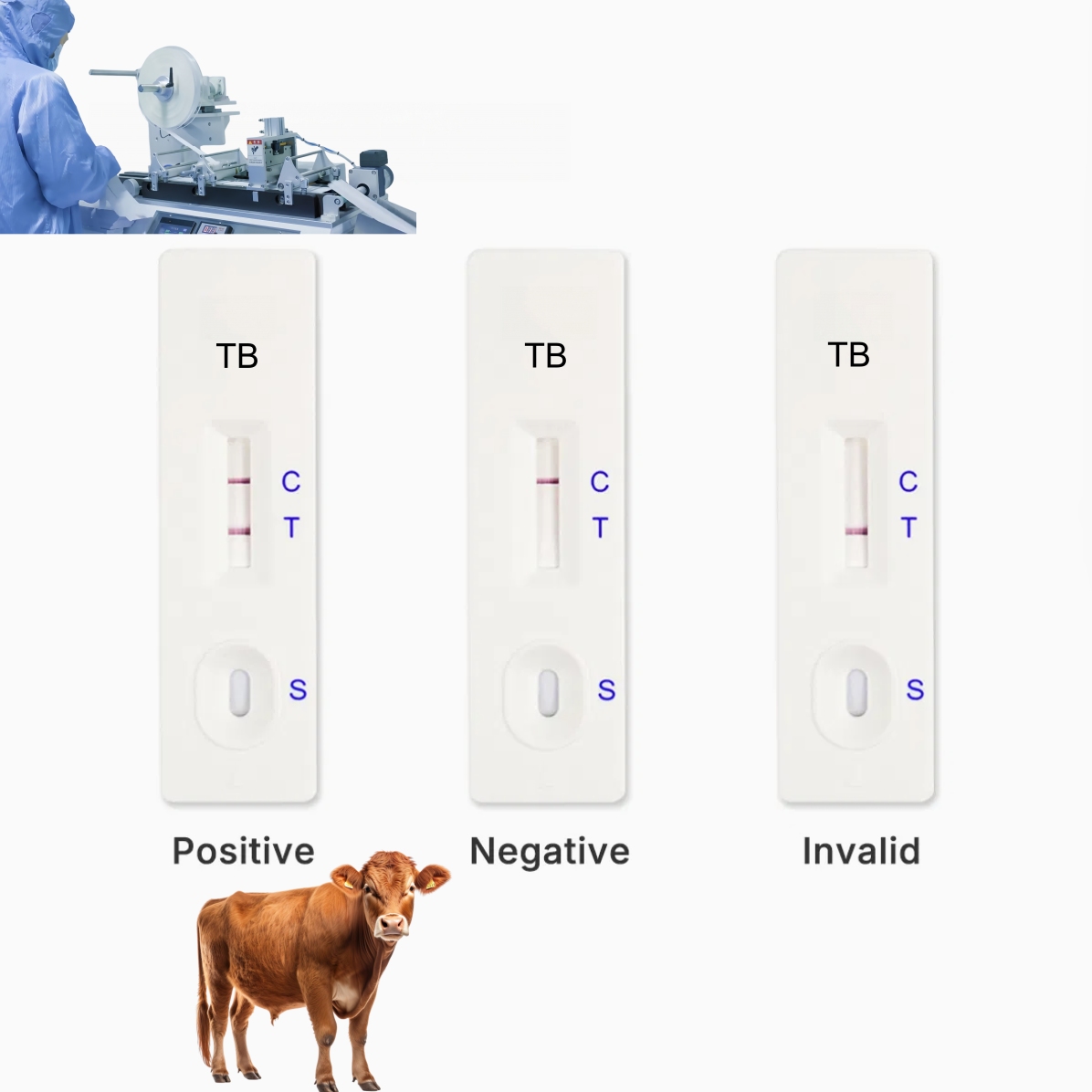
Bovine tuberculosis is a chronic infectious disease that affects cattle health, herd productivity, and livestock management. Early screening helps veterinarians, farms, and animal health professionals identify potential infection risks and implement effective disease control strategies. With simple operation, rapid results, and no requirement for complex laboratory equipment, the test is suitable for cattle farms, veterinary clinics, livestock laboratories, breeding facilities, and animal disease monitoring programs.
Leave A Message
Scan to Wechat :

Scan to WhatsApp :

Hi! Click one of our members below to chat on