

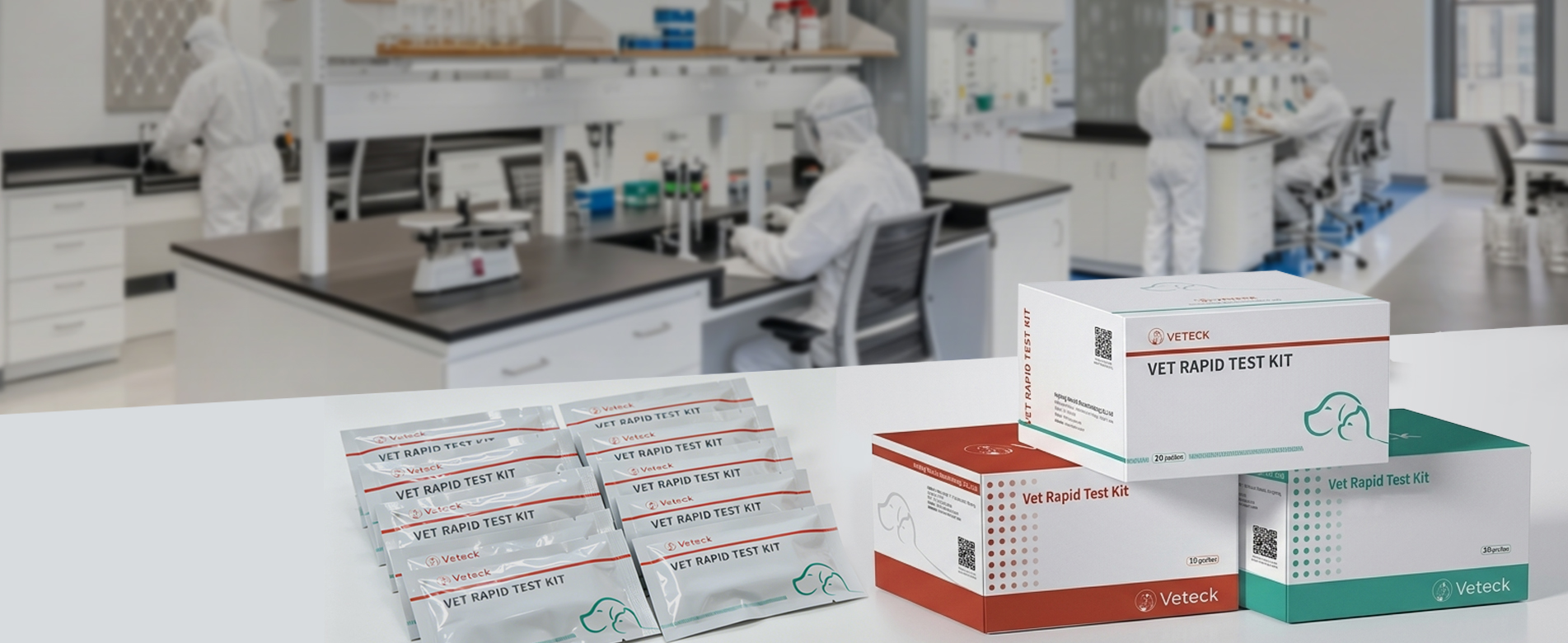
Canine Enteric Pathogen Panel: Parvo, Coronavirus, and Giardia Antigen Combo Rapid Test

Deeply cultivating precise vet diagnostics, empowering smart medical services
Key Takeaways
-
Canine enteric infections present with overlapping clinical signs — differentiation is essential for treatment
-
Three major pathogens: Parvovirus (viral, high mortality), Coronavirus (viral, generally milder), Giardia (protozoan, zoonotic)
-
Combo testing enables simultaneous detection from a single fecal sample in < 10 minutes
-
Giardia has zoonotic potential — accurate identification protects both animal and human health
-
Streamlined testing improves clinic workflow, reduces costs, and enables precise targeted therapy
Clinical Significance: Why Multiplex Testing Matters
Canine enteric diseases are among the most common presentations in veterinary practice. Diarrhea, vomiting, and weight loss can result from multiple pathogens, all presenting with nearly identical clinical signs.
| Pathogen | Type | Key Clinical Features | Zoonotic Risk |
|---|---|---|---|
| Canine Parvovirus (CPV) | Virus | Severe hemorrhagic diarrhea, vomiting, leukopenia, high mortality | No |
| Canine Coronavirus (CCV) | Virus | Milder diarrhea, vomiting, often self-limiting | No |
| Giardia spp. | Protozoan parasite | Foul-smelling, watery diarrhea, weight loss, poor coat condition | Yes |
Clinical Insight: In puppies, co-infections (e.g., CPV + Giardia) are common and often present with more severe, persistent clinical signs that may not respond to initial symptomatic therapy.
Pathogen Comparison: Transmission, Diagnosis, and Treatment
| Parameter | Canine Parvovirus | Canine Coronavirus | Giardia |
|---|---|---|---|
| Transmission | Fecal-oral, fomites | Fecal-oral | Fecal-oral (cyst ingestion) |
| Affected Population | Unvaccinated puppies, young dogs | All ages (puppies most susceptible) | Puppies, crowded environments |
| Primary Clinical Signs | Hemorrhagic diarrhea, vomiting, fever | Mild to moderate diarrhea, vomiting | Watery, foul-smelling diarrhea, weight loss |
| Diagnostic Method | Antigen detection (fecal) | Antigen detection (fecal) | Antigen detection (fecal) — more reliable than flotation |
| Treatment | Intensive supportive care, IV fluids, antibiotics | Supportive care, hydration | Anti-protozoals (fenbendazole, metronidazole) |
| Prevention | Vaccination | Vaccination (less common) | Hygiene, environmental decontamination |
| Public Health Concern | None | None | Zoonotic — transmissible to humans |
Giardia: The Zoonotic Component
Unlike viral pathogens, Giardia duodenalis (syn. G. intestinalis, G. lamblia) is a zoonotic protozoan that can infect both animals and humans.
| Zoonotic Transmission Risk | Details |
|---|---|
| At-risk populations | Children, immunocompromised individuals, pet owners in close contact |
| Transmission route | Fecal-oral; ingestion of cysts from contaminated environment |
| Cyst environmental survival | Weeks to months in cool, moist conditions |
| Clinical significance in humans | Acute gastroenteritis, diarrhea, abdominal cramps |
Clinical Implication: A positive Giardia result requires not only treatment of the animal but also client education on hygiene, handwashing, and environmental decontamination to prevent human infection.
Technology: Antigen Detection vs. Traditional Fecal Flotation
| Parameter | Antigen Detection (Rapid Test) | Fecal Flotation (Microscopy) |
|---|---|---|
| Target | Giardia specific antigens | Cysts (morphological identification) |
| Sensitivity | High (detects intermittent shedding) | Moderate to low (shedding is intermittent) |
| Specificity | High | Variable (requires skilled technician) |
| Operator dependency | Low | High (interpretation varies) |
| Result time | < 10 minutes | 15–30 minutes + technician time |
| Viability assessment | No |