

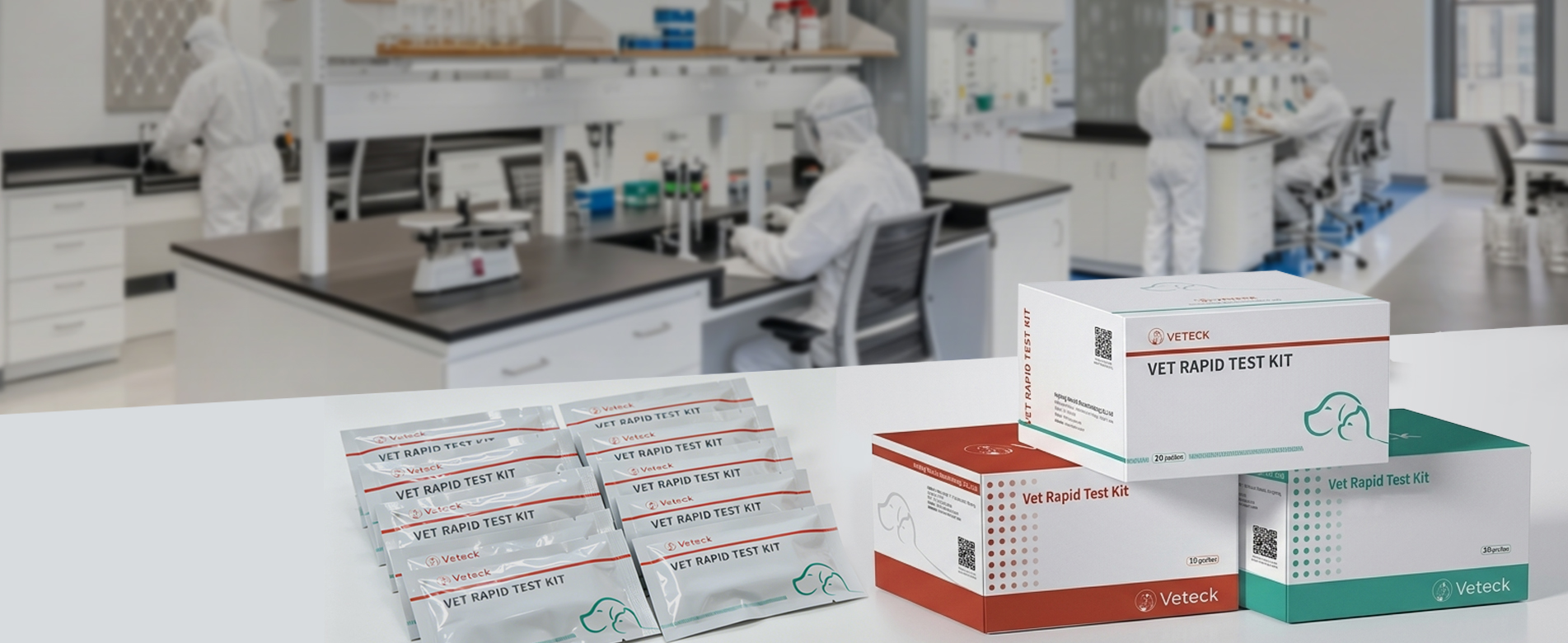
Canine Fecal Occult Blood Rapid Test: A Clinical Guide for Veterinary Professionals

Deeply cultivating precise vet diagnostics, empowering smart medical services

Discover how globin-specific Fecal Occult Blood (FOB) immunoassays detect hidden GI bleeding in dogs. Learn clinical SOPs, technology comparisons, and practice revenue strategies.
Gastrointestinal (GI) bleeding is a critical yet frequently insidious clinical sign in canine medicine. While gross hemorrhage (melena or hematochezia) prompts immediate owner concern, occult (hidden) GI bleeding remains invisible to the naked eye. Left undetected, subclinical blood loss silently progresses to severe chronic anemia, systemic weakness, and advanced organ pathology.
Incorporating rapid Fecal Occult Blood (FOB) Immunoassays into routine diagnostic workups allows veterinarians to identify mucosal lesions, ulcers, and occult GI neoplasia early—long before overt clinical collapse occurs.
Key Takeaways
-
Invisible Threat: Fecal Occult Blood indicates hidden GI bleeding that cannot be detected visually during a physical exam or gross fecal inspection.
-
Broad Differential Diagnosis: Causes range from mild inflammatory gastritis and hookworm infestations to severe gastric ulcers and malignant GI neoplasia (adenocarcinoma, leiomyosarcoma).
-
Immunoassay Superiority: Globin-specific lateral flow assays eliminate dietary false-positives caused by red meat, offering vastly superior specificity compared to traditional guaiac-based chemical tests.
-
Rapid In-Clinic Diagnostics: Delivers objective results in under 10 minutes, making it ideal for senior wellness panels, chronic anemia workups, and NSAID monitoring.
Clinical Significance: Why Screen for Occult GI Blood?
When GI mucosal integrity is compromised, microscopic bleeding occurs continuously. Because dogs digest and metabolize small volumes of blood, early-stage bleeding produces no visible stool changes.
| Clinical Consequence | Impact on Patient & Practice |
| Chronic Micro-Hemorrhage | Leads to progressive iron-deficiency anemia, unexplained lethargy, and exercise intolerance. |
| Delayed Diagnosis | Allows underlying ulcers or malignant GI tumors to advance to inoperable stages. |
| Missed Therapeutic Window | Potentially curable inflammatory or parasitic conditions remain untreated. |
| Owner Frustration | Unresolved, vague GI symptoms erode client confidence in practice care. |
Clinical Insight: In senior dogs (≥ 7 years old), a positive FOB test should raise immediate clinical suspicion for gastrointestinal neoplasia or severe ulcerative gastroenteropathy until proven otherwise.
Common Causes of Occult GI Bleeding in Dogs
Occult GI bleeding spans a wide range of etiologies across various patient demographics:
Technology Comparison: Immunoassay vs. Guaiac Chemical Tests
Historically, guaiac-based chemical cards were used to detect fecal blood. However, modern veterinary diagnostics favor Globin-Specific Immunoassays (Lateral Flow POCT) due to significant analytical advantages:
Key Advantage: Globin-specific immunoassays target the protein portion of canine hemoglobin rather than the heme iron structure. Because dietary globin is broken down by upper digestive enzymes, only active bleeding within the digestive tract yields intact globin in the feces, virtually eliminating false-positive results from diet.
Standard Operating Procedure (SOP) & Workflow Integration
Test Execution Procedure
-
Specimen Collection: Collect a small, representative fecal sample using the sterile swab included in the kit.
-
Buffer Extraction: Insert the swab into the pre-filled extraction buffer tube. Swirl and agitate thoroughly to elute the target globin antigen into solution.
-
Assay Application: Dispense 3 to 4 drops of the extracted sample into the sample well (S) of the lateral flow cassette.
-
Result Interpretation: Read the visual control (C) and test (T) lines strictly at 10 minutes.
Recommended Testing Protocol & Practice Growth
Integrating FOB screening into standard clinical workflows enhances diagnostic thoroughness while expanding practice revenue:
| Patient Population | Recommended Frequency | Clinical & Business Rationale |
| Senior Dogs (≥ 7 years) | Annual Wellness Screen | Detects early GI neoplasia and subclinical ulcers; increases senior package value by 20%–35%. |
| Chronic NSAID / Steroid Therapy | Every 3–6 Months | Monitors for subclinical drug-induced mucosal erosions before severe perforation occurs. |
| Chronic Anemia Workup | Diagnostic Workup | Instantly confirms or rules out the GI tract as the primary source of blood loss. |
| Post-Foreign Body Surgery | 7–14 Days Post-Op | Confirms resolution of mucosal hemorrhage and verifies intestinal wall healing. |
| Parameter | Immunoassay (Globin-Specific) | Traditional Guaiac-Based Test |
| Target Molecule | Intact Globin protein of Hemoglobin | Peroxidase activity of Heme |
| Dietary Interference | None (Does not react with dietary meat) | High (False positives from raw/canned red meat) |
| Vitamin C Interference | None | High (Causes false-negative results) |
| Diagnostic Specificity | High (≥ 98%) | Low (~80%–85%) |
| Analytical Sensitivity | High (Detects micro-bleeding) | Moderate |
| Time to Result | < 10 Minutes | 5–10 Minutes |